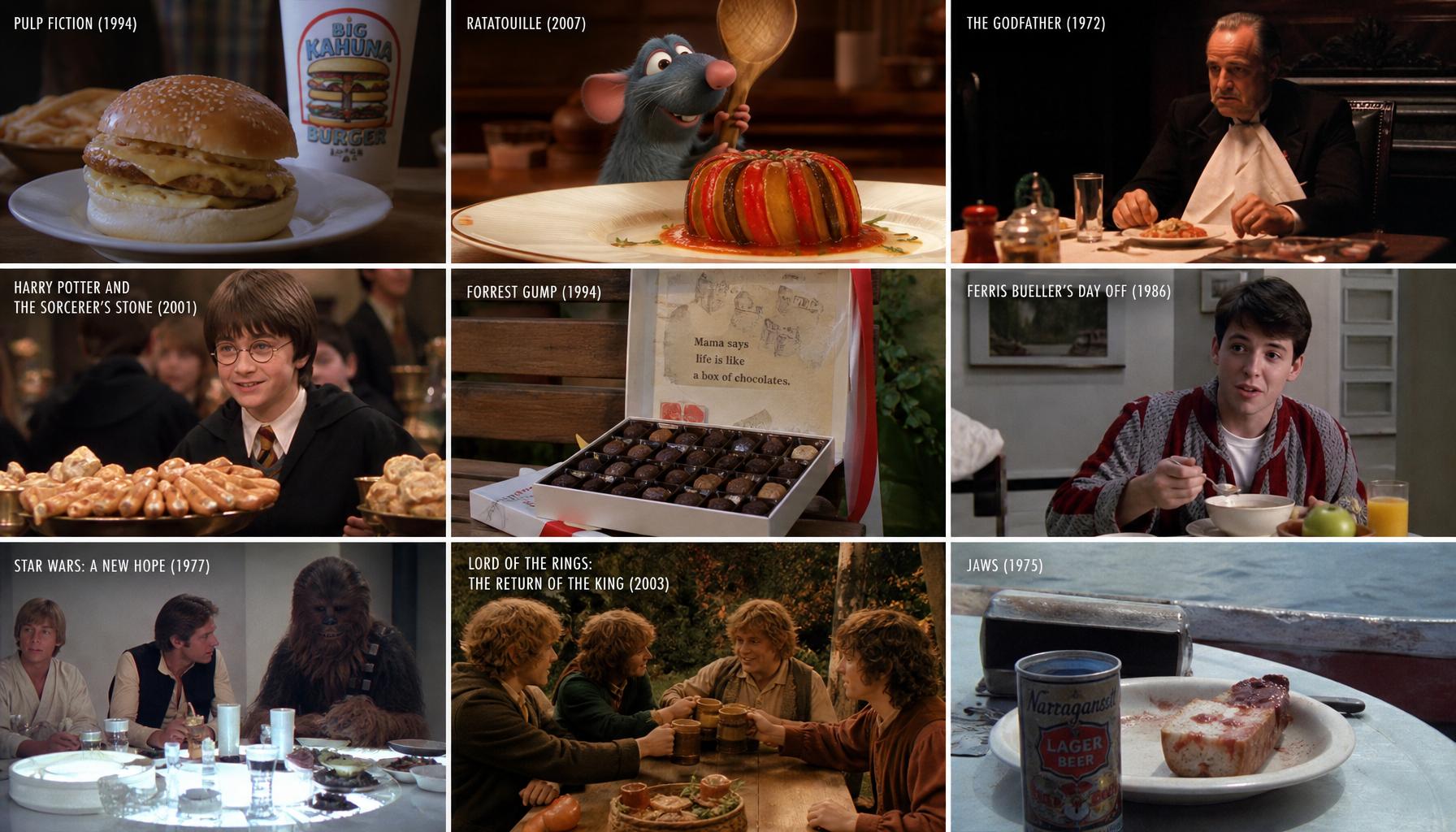
The close relationship between food and art has been something of a cultural study over the years, and one major medium of art where this relationship comes alive is Cinema. Films explore and represent life in many unique ways and food is often an inherent part of that. Food and drinks appearing in films aren’t random, they are carefully chosen with immense thought going into the choice of food that is shown.
Let’s delve into the interesting world of culinary cinematography to understand the correlation between food and cinema better.
The Godfather, one of the best films ever made, uses food as a powerful element throughout the series. In the famous dinner scene, where Clemenza teaches Michael how to make spaghetti and meatballs, we’re given insight into Italian-American culture through the lens of a ubiquitous, universally beloved dish. This vital scene contains a sense of home and family, integral parts of the film’s narrative, label and understand the Corleone’s identity as an Italian-American family.
Another iconic movie where food takes center stage is the animated movie “Ratatouille”. The film takes culinary cinematography to another level, with its brilliant and mouth-watering presentation of French cuisine. The film not only shows the audience the process and the beauty of cooking but also delves deep into French culture.
Cinema does not always celebrate food; it also uses it to critique. Looking at the film “Chocolat”, the presence of food is the metaphor laden narrative. It uses chocolate as a medium to explore and challenge the strict moral norms of a rigid community.
In films, food is more than just sustenance. It is a vehicle for expressing a character’s personality, their culture, status, and their emotion. Look at “Julie & Julia”. The film is based on two real-life stories of women who find solace, identity, and ultimate happiness in their cooking.
While western cinema has its fair share of ‘food films’, Asian cinema is not far behind. The Chinese film ‘Eat Drink Man Woman’ and the Indian film ‘The Lunchbox’ are shining examples of how food can be used as a narrative style to tell compelling human stories.
In conclusion, there is no denying the powerful role that food plays in films. It’s a language, establishing communication between the story and its audience, it’s a symbol, representing various cultural, societal, and personal aspects, and most importantly, it’s an experience, creating empathy and evoking emotions.
So the next time you watch a film, pay a little more attention to the food shown, you might just understand the characters and the story a little better.